I confirm, I am 21 years of age or older.
*This website requires you to be 21 years of age or older.
You have to be 21 years old or older to enter the Royal Stag Fan.
I confirm, I am 21 years of age or older.
*This website requires you to be 21 years of age or older.
You have to be 21 years old or older to enter the Royal Stag Fan.

Royal Stag Fan

25 May 2026
From packed stadiums to global tournaments, the sport has grown into far more than just a game. Women’s cricket today stands at the intersection of sport and culture and ambition built over decades by athletes who continued showing up long before the spotlight arrived.
For years, cricket belonged almost entirely to men, at least in the public imagination. Women who wanted to play professionally often faced limited opportunities and very little visibility. Even then many continued pursuing the sport simply because they refused to let the game go.
Long before the crowds arrived players kept showing up anyway.
Table of Content:
The history of First Women’s Cricket dates back to the 1700s when women in England began participating in local matches. At the time the sport existed on a much smaller scale without professional structures or major public attention.
Most games were played within local communities where participation came from passion for the sport rather than recognition. Opportunities remained limited and Women’s Cricket rarely received visibility outside these circles.
Even then interest in the game continued to grow. As more women started playing local clubs and regional competitions slowly began emerging. These early steps later became the foundation for the global rise of Women’s Cricket.
What started quietly would eventually grow into something impossible to ignore.
The history of Indian Women’s Cricket officially began in 1973 with the formation of the Women’s Cricket Association of India. It was a turning point that gave the sport a more organised structure and opened the door for competitive domestic cricket.
The first national championship took place in Pune with only a handful of participating teams. Over time more states joined in and the sport gradually began building visibility across the country. University tournaments and zonal competitions became important spaces for discovering talent from different parts of India.
International cricket arrived soon after. One of the defining early moments came in 1976 when India defeated the West Indies in front of thousands of spectators. At a time when Women’s Cricket received very little global attention, moments like these slowly pushed the sport into public conversation. The sport was beginning to draw attention. During this period the rise of the first Indian Women Cricketers became deeply important.These early players stepped onto the field at a time when Women’s Cricket lacked visibility and support across the country. Their journeys were not just about competition. They were about proving that women belonged in the game just as much as anyone else.
The rise of Women’s Cricket came with challenges at every stage. Access to proper training and sponsorships remained limited while media attention around the sport stayed low for years.
For many players cricket was never the only responsibility. The game existed alongside studies and jobs and responsibilities at home. Building a career through the sport often felt uncertain especially when recognition arrived much later compared to Men’s Cricket.
Social perceptions around women in professional sports created another barrier. Many of the first Indian Women Cricketers had to constantly prove themselves both on and off the field before receiving acceptance and visibility.
Still the sport kept moving forward. Every tournament and every performance slowly changed how people viewed Women’s Cricket. Over time more young girls began seeing the game not just as a passion but as something they could truly pursue professionally.
Women’s cricket did not grow because conditions were easy. It grew because players refused to stop believing in it.
The Women’s Cricket World Cup in 1973 became one of the earliest major milestones for the sport globally. Interestingly the Women’s tournament arrived before the men’s version helping bring international visibility to the game much earlier than many realise.
India later hosted the Women’s World Cup in 1978 and again in 1997. The crowds during these tournaments reflected something important. The performances of the first Indian Women Cricketers were slowly helping Women’s Cricket reach wider audiences across the country.
A major turning point arrived in 2005 when the International Cricket Council (ICC) integrated Women’s Cricket under its global structure. The move helped Women’s Cricket gain more structure and wider global recognition.
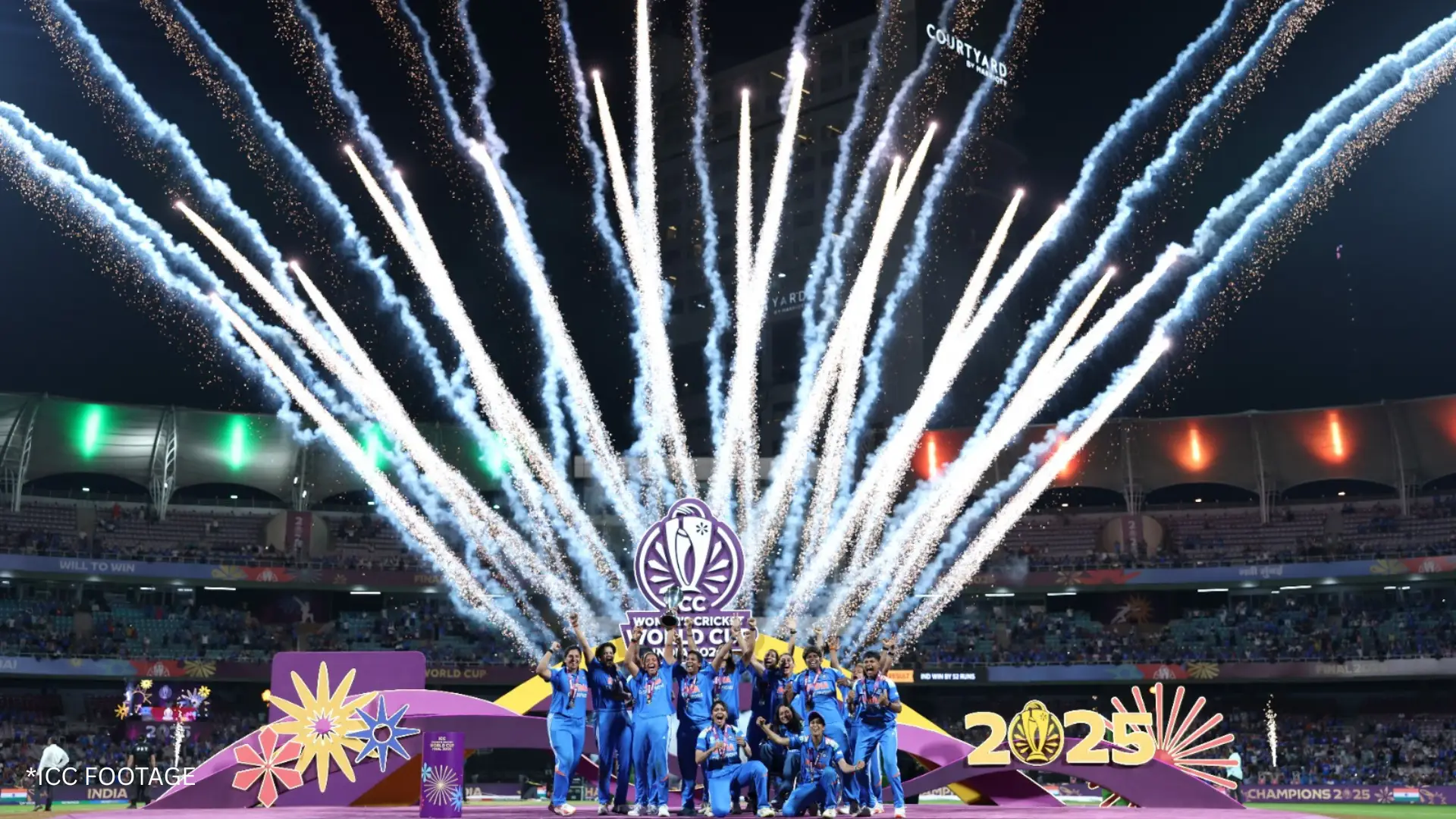
Then Women’s Cricket entered a different era. Broadcast deals expanded and franchise leagues entered the picture. Women’s Cricket was no longer operating quietly in the background. It had started entering mainstream culture. Women’s Cricket was finally stepping into wider public attention.
The history of Indian Women’s Cricket is shaped by athletes who helped redefine the sport. Players like Shantha Rangaswamy and Diana Edulji helped lay the foundation for future generations while later cricketers carried the game into wider public attention.
One of the most important names in the history of Indian Women’s Cricket is Shantha Rangaswamy who is widely recognised as one of the first Indian woman cricketers to bring national attention to the sport. At a time when Women’s Cricket received very little recognition in the country she continued pushing the game forward through belief and persistence.
As the first Indian Woman Cricketer to score an international century Shantha Rangaswamy became a symbol of progress for women in sport. Her journey reflected what many early players experienced, limited visibility and limited opportunities yet an unwavering commitment to the game.
For many fans and aspiring athletes she represented far more than statistics or records. She became one of the defining faces of Indian Women’s Cricket and inspired future generations to dream bigger and pursue the sport professionally.
Over the years many players broke records and pushed Women’s Cricket into wider public conversation through their performances and leadership on the field. Their success changed how audiences connected with the sport and inspired more young girls to pursue cricket professionally.
Women’s cricketers were no longer just athletes. They had become icons.
Also Read: Who Was the First Indian Woman Cricketer? The Pioneer Who Inspired Generations to Live It Large
Then came T20 Cricket. Faster and impossible to ignore
The shorter format completely changed how audiences experienced the sport. Broadcast coverage expanded rapidly while digital platforms amplified player visibility and fan engagement at a completely different scale.
Franchise leagues brought a new level of entertainment and energy to Women’s Cricket. Stadiums became louder and rivalries became bigger while players became recognisable far beyond the boundary line. Women’s cricket was no longer just evolving quietly. It had entered mainstream sporting culture.
The game was no longer asking for attention. It was commanding it.
Modern women cricketers are no longer just competing at the highest level. They are embracing ambition openly and truly living large both on and off the field.
Today’s athletes influence conversations around fashion and fitness and leadership and social media culture. From stadium entrances to global campaigns Women Cricketers are shaping a generation that sees sport not just as competition but as identity and self-expression.
What once began as a fight for visibility has now evolved into a movement driven by belief and ambition. Today’s players reflect a mindset ready to dream bigger and speak louder and truly live large.
This is no longer just the rise of a sport. It is the rise of a generation.
Women’s Cricket continues expanding across the world. Investments in grassroots development and youth tournaments and professional leagues are creating more opportunities for future athletes.
A younger generation has connected with Women’s Cricket through highlights and personalities and social media and moments that travel instantly online.
The audiences are growing and the conversations surrounding the game continue to expand. And the future of the game feels larger than ever before.
Women’s cricket is no longer building momentum. It has already arrived.
The history of Indian Women’s Cricket is ultimately a story of resilience and ambition and transformation. From the journeys of the first Indian Women Cricketers and every first woman cricketer who helped shape the sport to the rise of today’s global sporting icons, women cricketers have completely reshaped the future of the game.”
Today women’s cricket represents far more than performances on the field. It reflects confidence and self-belief and the courage to break barriers while inspiring a new generation to dream bigger than ever before.
As excitement builds around the upcoming Women’s World Cup 2026 brands like Royal Stag Packaged Drinking Water continue supporting the growing momentum surrounding Women’s Cricket and the athletes driving the sport forward.
Because the journey of Women’s Cricket was never only about the scoreboard. It was about breaking barriers, pushing boundaries, and proving that greatness belongs to those who dare to dream larger. Women’s Cricket may stand on a bigger stage today.But the spirit that built it was always there.
The crowds grew louder. The lights got brighter. But the fight? That was never small.