I confirm, I am 21 years of age or older.
*This website requires you to be 21 years of age or older.
You have to be 21 years old or older to enter the Royal Stag Fan.
I confirm, I am 21 years of age or older.
*This website requires you to be 21 years of age or older.
You have to be 21 years old or older to enter the Royal Stag Fan.


Royal Stag Fan

26 June 2026
Rap music is considered an incredible form of expression. It began with people who had stories to tell and the ability to recite them rhythmically. Through this expression they were able to reshape the world's relationship with music, language, and identity. From block parties in the Bronx to sold-out arenas across the world, rap has become one of the world's most influential forms of musical expression.
If you strip it down to the basics, rap is basically spoken word that is rhythmically aligned with music. The artist becomes the lead instrument, delivering lyrics with timing so efficient it almost functions like percussion. Rap is considered distinctive because it has the ability to communicate, express and elaborate stories melodically. A rapper works within a beat's grid, by bending syllables, stretching pauses, and controlling tone in ways that are usually unique to themselves. It is simultaneously structured and expressive.
People usually define it as "Rhythm and Poetry". ‘To rap’ means to talk seriously, plainly and without pretence. Originally, rap music came out of communities that were ignored. They spoke about what they saw: inequality, survival, ambition, and joy. Nothing was off the table. That instinct has never really changed. The platforms are bigger, the production glossier, but the impulse is still the same.
The earliest connection to the origin of rap music is found in the Bronx, New York. In the 1970s the borough was in rough shape. Budget cuts, housing fires, economic neglect. To develop a sense of inclusion, block parties became a source of entertainment. The DJs became the architects of these parties. They discovered they could isolate the percussive breaks in funk and soul records, loop them, and keep the local crowd locked. These extended breakbeats became the foundation of rap music. These beats were accompanied by MCs who added lyrical expression and storytelling.
Also Read: Top 5 Best Indian Rappers Shaping India’s Hip Hop Music Industry
DJ Kool Herc is the name that is largely associated with rap's origin, and for good reason. He was a Jamaican immigrant who brought the sound system tradition of Kingston to New York. Herc's 1973 parties in the Bronx became the blueprint for rap music. He figured that he could cut between two copies of the same record to extend the break indefinitely, a technique that changed the way music was made. The space he created with the breaks gave MCs room to work lyrically and melodically.
Usually rap tracks rest on three things. First is the beat. The beat is able to set the emotional register even before a single word lands. Second, is the flow, this is usually how a rapper lyrically navigates that beat, this mainly consists of where the words land and how the syllables stack. Third, are the lyrics. The lyrics are typically structured to narrate the story the artist wants to express.
The genre has been attributed to having its own vocabulary. Sampling, lifting fragments from older recordings and rebuilding them into something new, is both a technical skill and a way of acknowledging the music that built the genre. Storytelling gives rap its narrative power and the best rap tracks function almost like short films. Ad-libs, the off-the-cuff vocal interjections, add texture and personality to a track. Underneath all of it is cultural specificity: the sense that the artist is speaking from first-hand experience often leaves listeners captivated.
In the 1980s, Grandmaster Flash and the Furious Five brought unflinching social commentary. Run-D.M.C. collapsed the wall between hip-hop and rock, reached audiences who had never considered hip-hop a mainstream genre. Public Enemy made music that felt urgent and politically sharp. Together they turned something local into something national, making sure that the whole world was listening.
The Sugarhill Gang is usually given this credit, specifically for "Rapper's Delight" in 1979, the first rap record to crack mainstream charts. It was pop-friendly, fun, and accessible in a way that made industry executives understand rap was real. Its commercial impact opened the door to global recognition and success for rap as a genre.
Indian hip-hop did not arrive fully formed. It spent years underground, in cyphers, on message boards, and in small venues. Gradually, the music evolved and artists found a language that was genuinely their own, one that stopped borrowing and started building. Now Indian rap sits comfortably in mainstream music as a genre that is truly unique to itself.
Bohemia is mostly associated with giving Indian rap its early commercial shape, particularly through Punjabi hip-hop in the early 2000s. He gave the genre a cultural anchor at a time when it needed one. From there, artists like Raftaar, Badshah and DIVINE went on to dominate sold-out venues and streaming charts, and the audience that followed them made sure they were there to stay.
The production often sounds familiar, trap drums, 808s, processed vocals, but the soul of Indian rap is unique. Artists pull samples from folk traditions, classical structures, and regional dialects that have no Western equivalent. The references are hyper-local. The concerns are specific to Indian urban life, its pace, its contradictions, its particular brand of hustle. That rootedness is exactly what makes it resonate. It does not sound like a copy because it isn't one.
Bollywood gave Indian rap music its widest audience, and since then the relationship has been genuinely reciprocal. When films started incorporating street-born rap, with DIVINE's trajectory being the most significant example, the genre entered households that had never sought it out. This gave artists a wider platform to tell their stories to people who wanted to hear them.
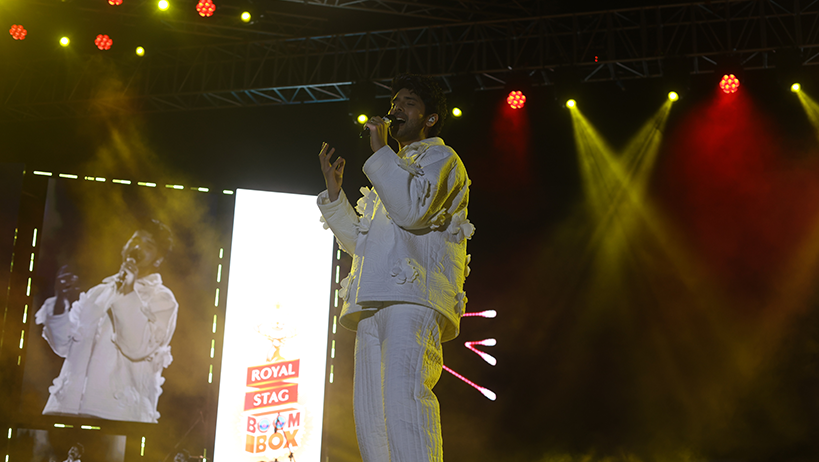
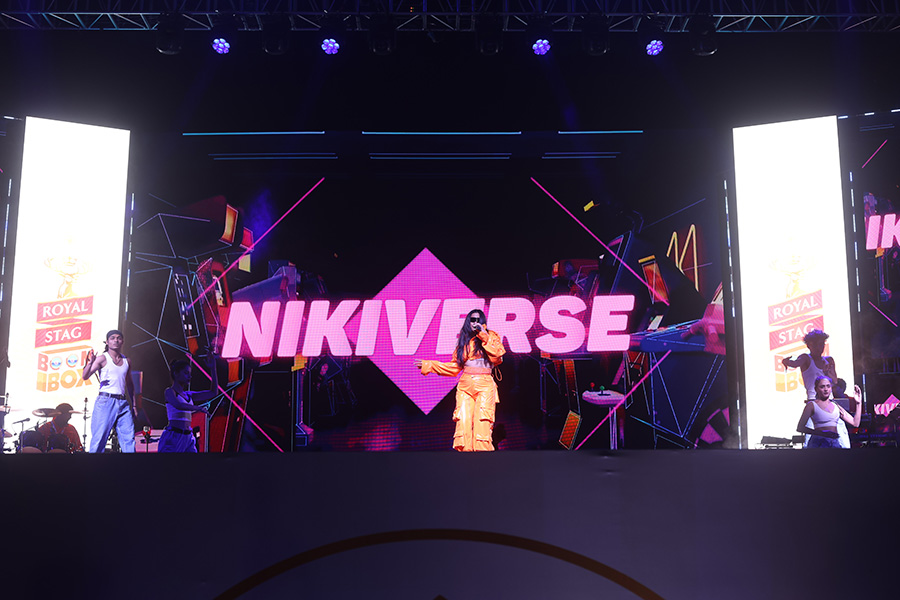
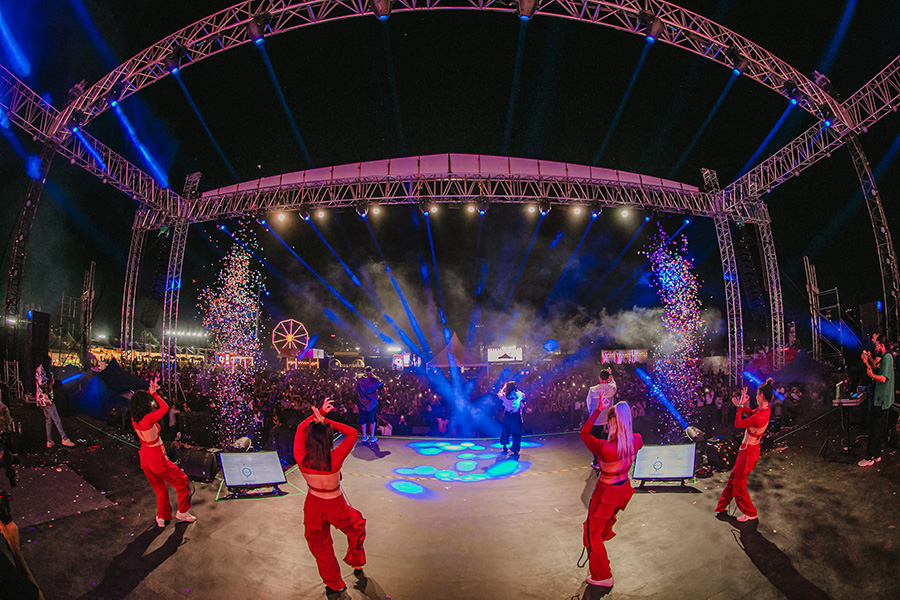
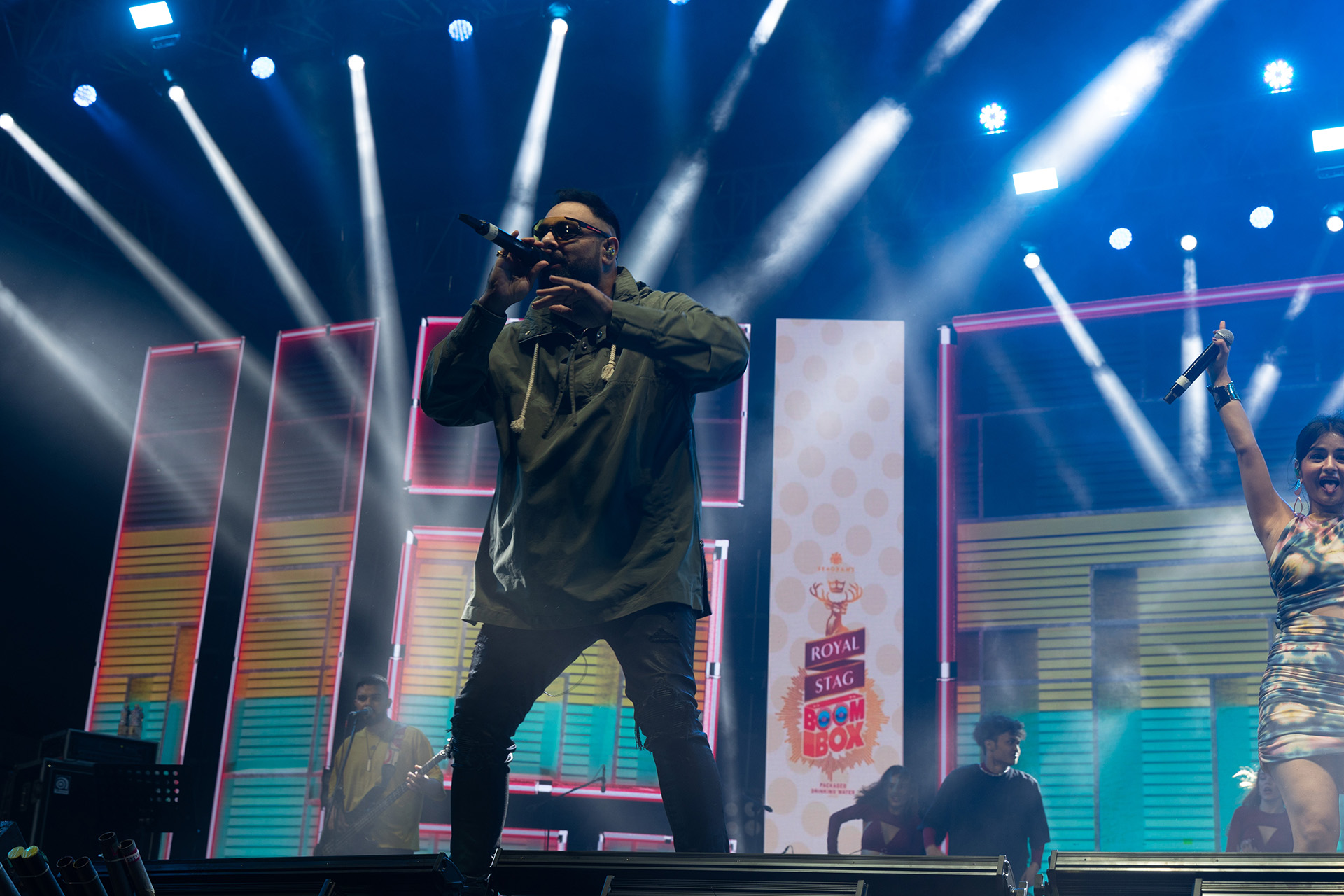
The scene has the recognition and commercial success that was missing before. Badshah, DIVINE, Raftaar, and Emiway Bantai remain central figures, but the next wave is already building underneath them. Events like Royal Stag Boombox have played a real part in that. Built on the ethos of Live It Large, these are not just concerts but communal moments where the energy of the music stops being something you experience through a screen and becomes something you feel in a crowd. Fans and artists share the same space, the same air, the same moment, and in doing so, the culture gets to see itself reflected back at a scale that no playlist or algorithm can replicate.
Rap resonates because it does not pretend. It has always been able to express things directly, without the need to dress it up or soften the edges. Young people with pressure, ambition, and the constant need to prove themselves do not want their difficulties to be romanticized. They want them to be understood. Rap does that better than most. It sits with those difficulties without flinching.
Rap began as a voice for communities that were being ignored and grew into one of the most influential art forms of the last fifty years. It has crossed every boundary placed before it, including India's, where it has firmly taken root. The combination of rhythm and storytelling continues to evolve, proving it still has countless stories left to tell.

Frequently Asked Questions
Rap is a style of music where the artist speaks or chants rhythmic, rhyming lyrics over a musical beat.
DJ Kool Herc is widely considered the pioneer who laid the foundation for rap by introducing the "breakbeat" style in the 1970s.
Indian rap is incredibly versatile, featuring a mix of Hindi, Punjabi, Marathi, Tamil, and English, often blending these to create a unique regional flavor.
Live festivals, like Royal Stag Boombox, provide a physical space for the community to gather, allow artists to showcase their craft in a high-energy environment, and help bridge the gap between underground talent and mainstream fans.
Bohemia is considered the pioneer of Indian rap, introducing Punjabi rap in the early 2000s. His influence was followed by mainstream artists like Honey Singh and Badshah.
Top Indian rappers include Badshah, DIVINE, Raftaar, Emiway Bantai, and Dino James, all known for their unique styles and massive fan followings.